Skip to content

The peppers

A full spectrum of peppers on the scale.

Every Harmony bottle starts with a pepper chosen for its flavor, not just its Scoville rating. Click any cultivar to read origin, Scoville band, and the sauce it headlines.

Heat map

Where the peppers land.

Relative heat for every pepper we grow and blend.

HARMONY Relative Heat Scale

Values in SHU, Scoville Heat Units

Harmony Hot Sauce bottles include a relative heat indicator on every label. The chart above gives you the heat range in Scoville Heat Units (SHU's) represented by the thermometer on the bottle.

The peppers we use are all much hotter than the end product. Our recipes are developed to find the perfect complementary ingredients for each unique type of pepper in a way that lets both the heat and the flavor come shining through, and in a heat range that will not cause you to spontaneously combust! Of course, there is a wide range of tolerance among those of us who enjoy hot peppers. The Relative Heat Scale gives you a quick way to understand the intensity of each product.
Meet the peppers

In our sauces

These are the cultivars that headline Harmony bottles today. Click through for origin, Scoville band, and the sauce each one stars.

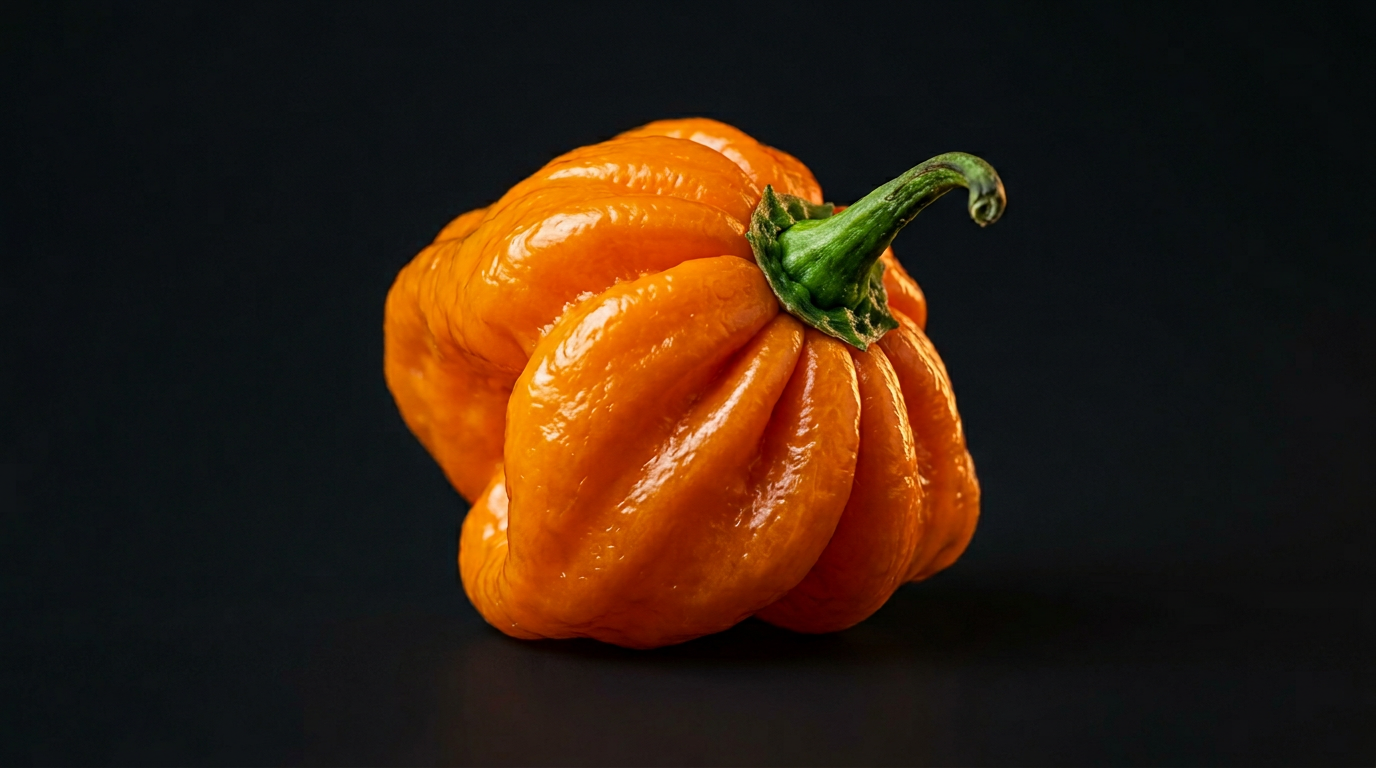
A single fresh vibrant orange Scotch Bonnet pepper with its distinctive pleated bonnet shape, photographed against a dark charcoal background.
Medium-Hot100,000 – 350,000 SHU

Scotch Bonnet

Caribbean — Jamaica, Trinidad, and Tobago

The most aromatic pepper in the Caribbean — stone-fruit aroma, floral finish, and real heat behind it.

Peak heat

350,000 SHU

Featured in

  • Scotch Bonnet Mango Sauce
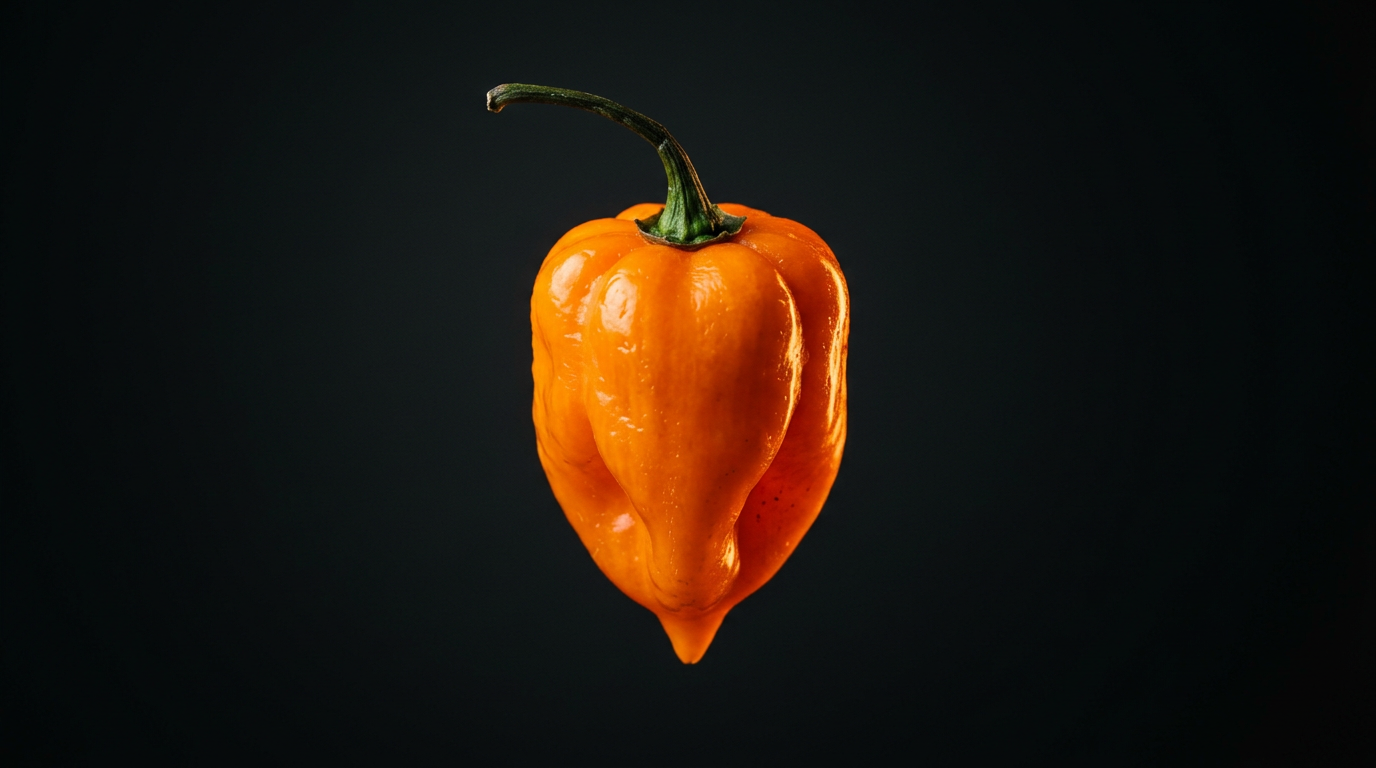
A single fresh bright orange Habanero pepper with its classic lantern shape and attached green stem, photographed against a dark charcoal background.
Medium-Hot100,000 – 350,000 SHU

Habanero

Yucatán Peninsula, Mexico

The workhorse of the super-hot family — citrus-forward, clean heat, and endlessly versatile on the shelf.

Peak heat

350,000 SHU

Featured in

  • Pineapple Habanero Sauce
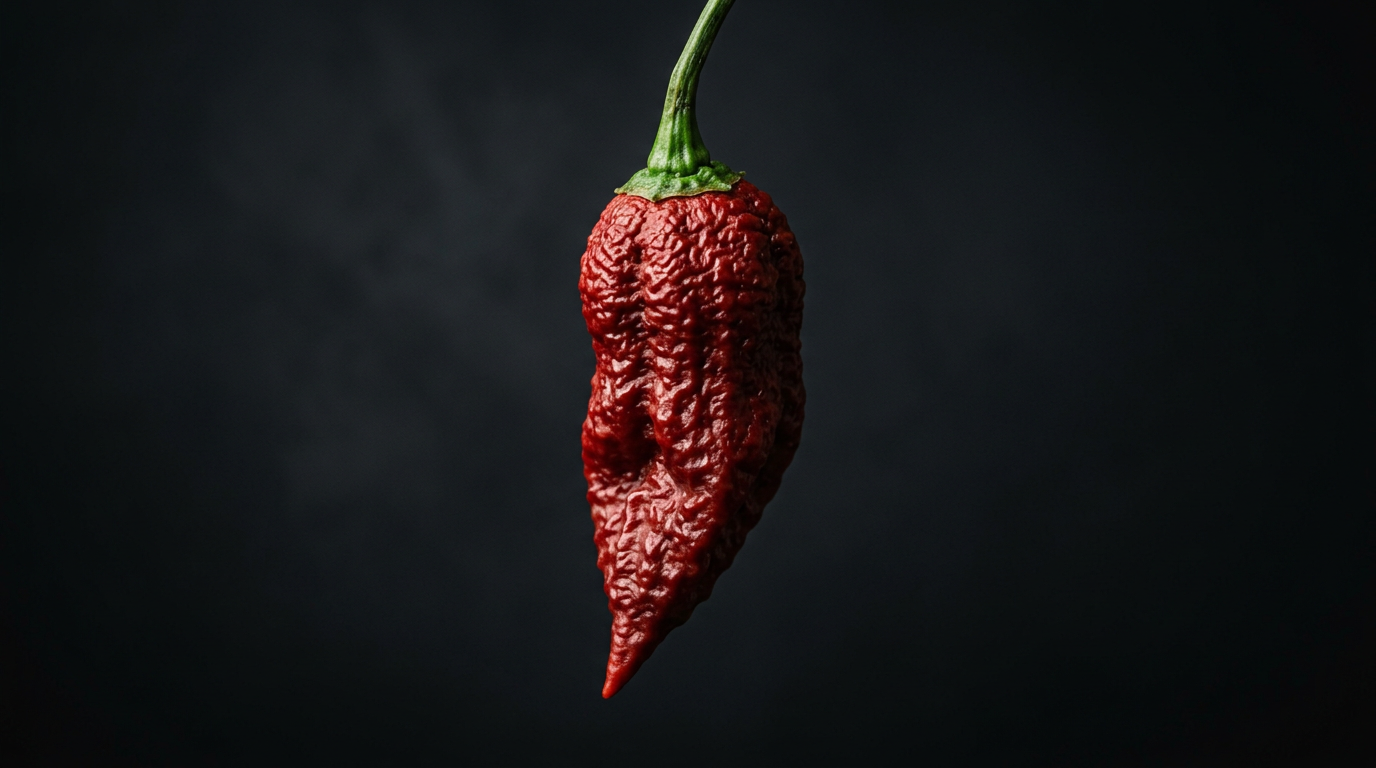
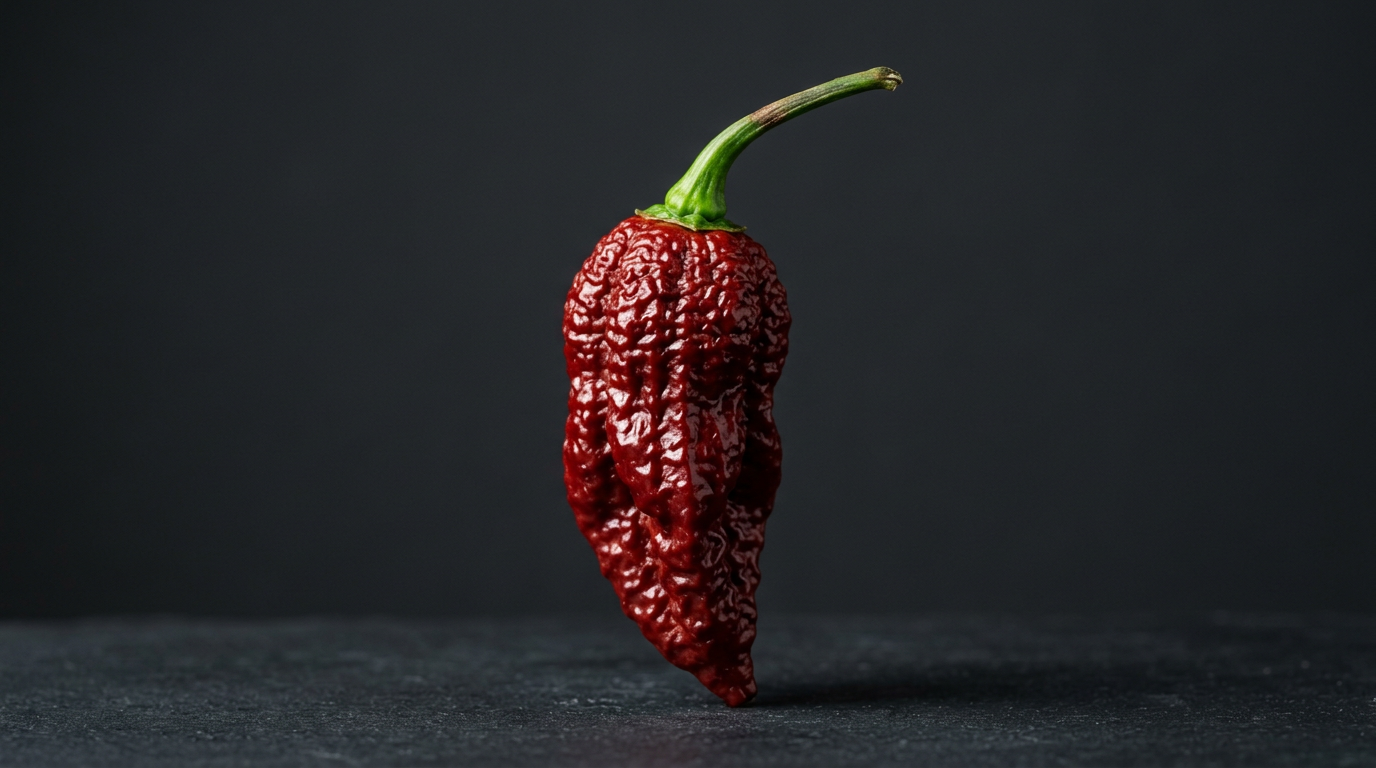
A single fresh deep red Bhut Jolokia ghost pepper with its signature wrinkled tapered pod, photographed against a dark charcoal background.
Extreme800,000 – 1,041,427 SHU

Bhut Jolokia (Ghost Pepper)

Northeast India — Assam, Nagaland, Manipur

The first chili certified above one million Scoville units — smoky, fruity, and genuinely ghostly in the back of the throat.

Peak heat

1,041,427 SHU

Featured in

  • Jolokia Sauce
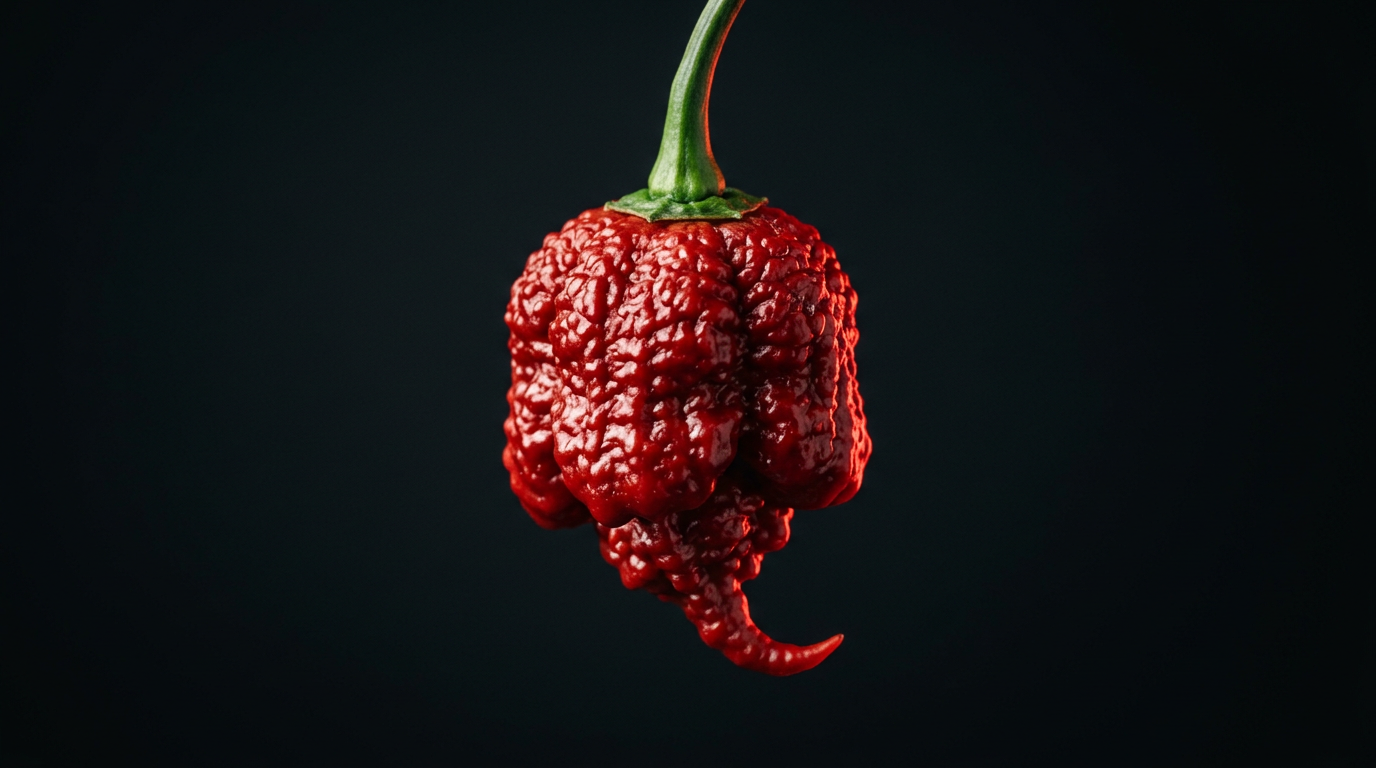
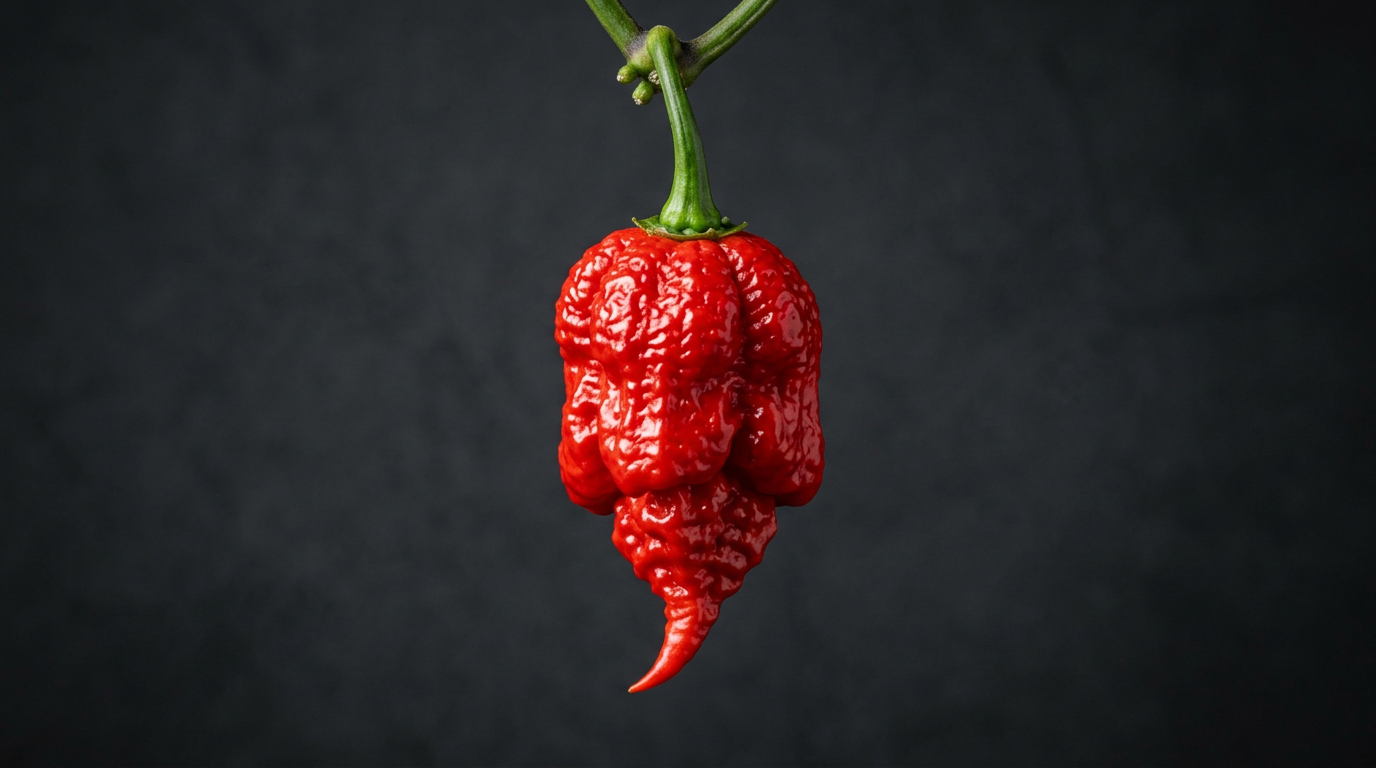
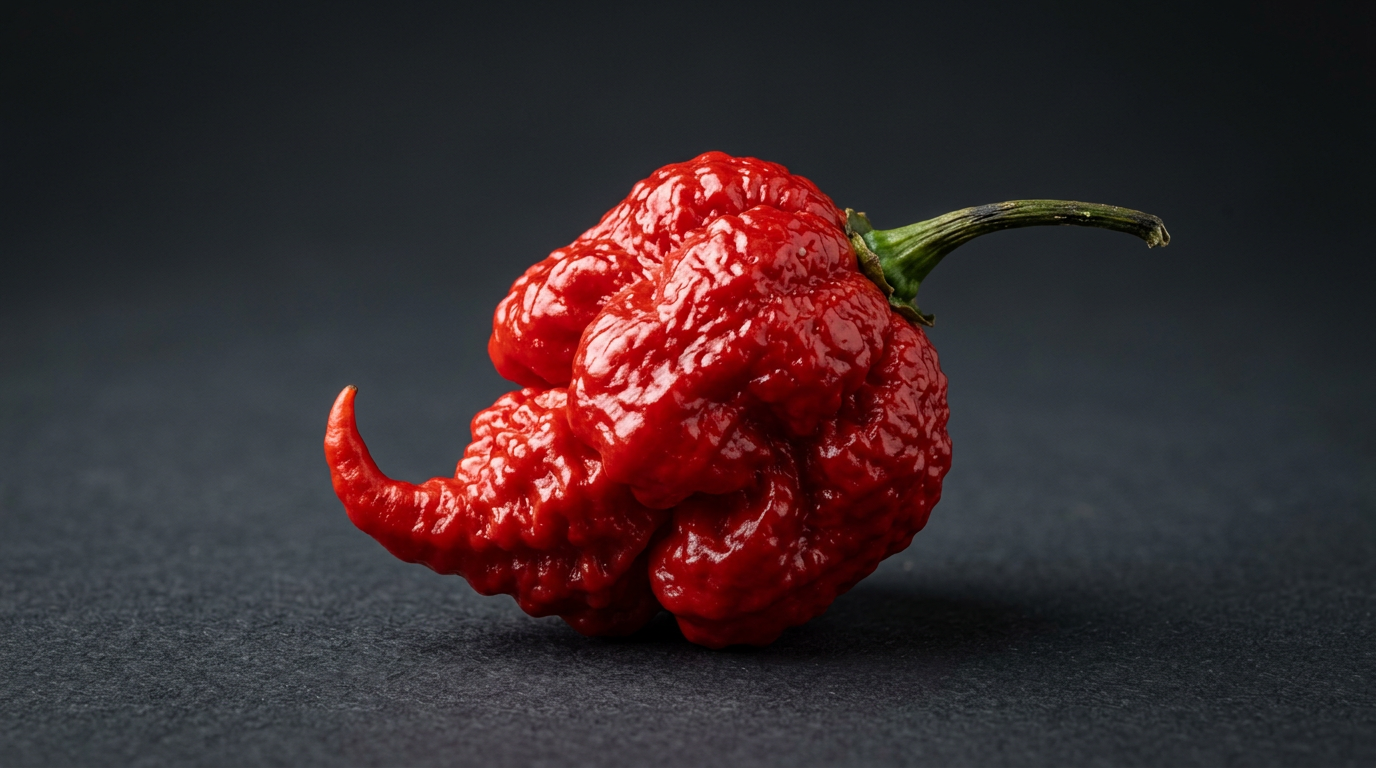
A single fresh deep red Carolina Reaper pepper with its iconic gnarled body and pointed scorpion tail, photographed against a dark charcoal background.
Extreme1,569,300 – 2,200,000 SHU

Carolina Reaper

South Carolina, United States — bred by Ed Currie

The record-holder. Bred specifically for maximum Scoville, but with a genuinely fruity front note before the burn takes over.

Peak heat

2,200,000 SHU

Featured in

  • Peachy Reaper Sauce

Reference

Other hot peppers

More chilies from the Scoville chart and our knowledge base — not headline in a Harmony sauce yet.

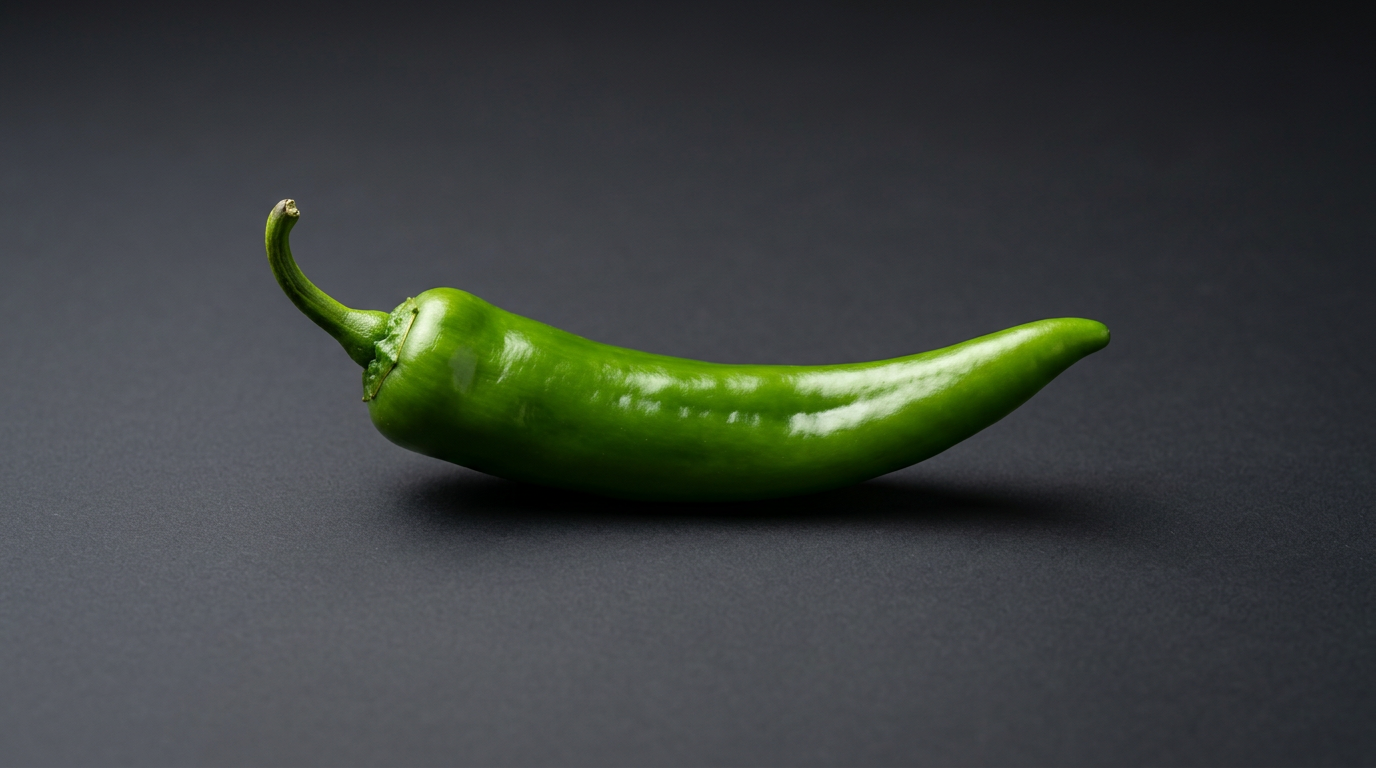
A single fresh green Anaheim chili pepper, long mild tapered pod with stem, photographed against a dark charcoal background.
Medium500 – 2,500 SHU

Anaheim

New Mexico and California, United States / northern Mexico

The gentle workhorse of the Southwest — mild, slightly sweet, and perfect when you want flavor without a fight.

Peak heat

2,500 SHU

Featured in

Not in a Harmony sauce yet

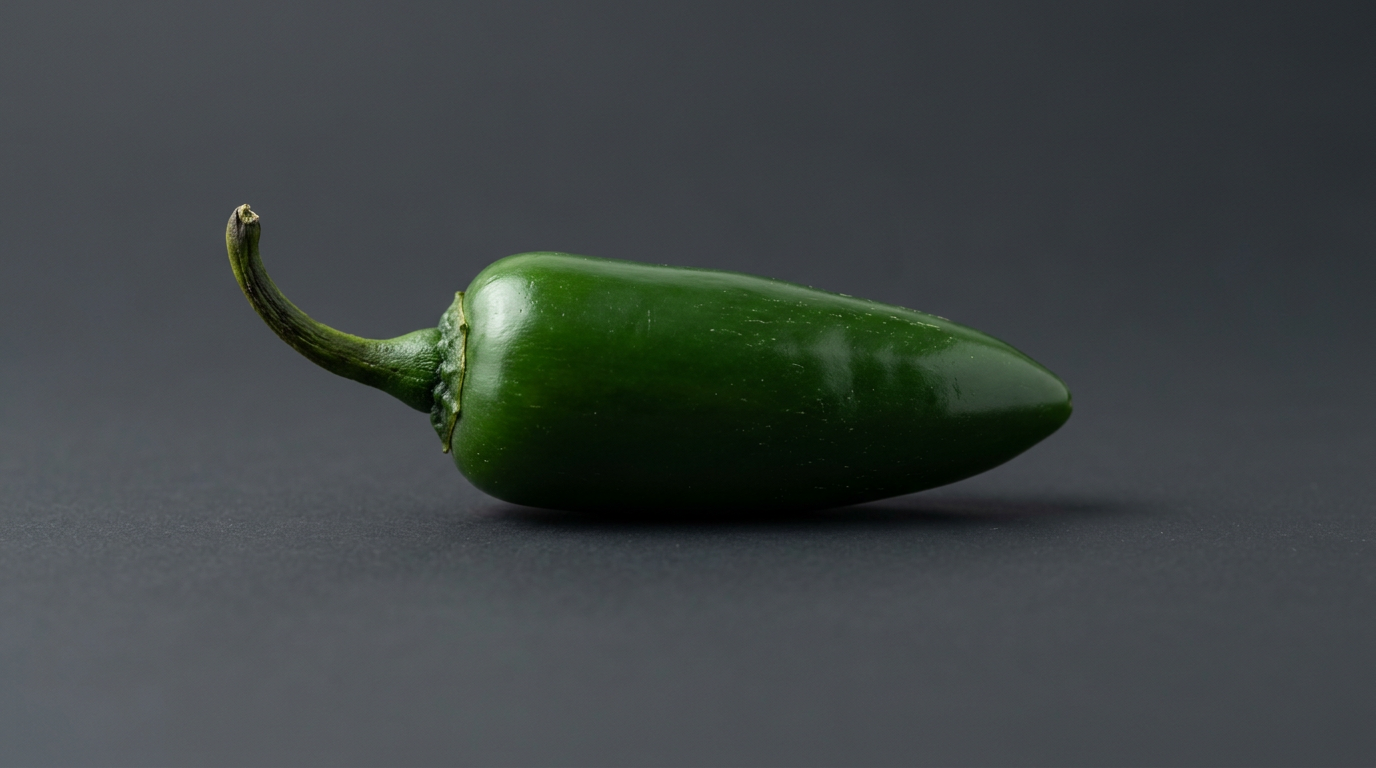
A single fresh green Jalapeño pepper with thick walls and classic tapered shape, photographed against a dark charcoal background.
Medium2,500 – 8,000 SHU

Jalapeño

Central Mexico — especially Xalapa region (Veracruz)

The world’s most familiar hot pepper — bright, snappy heat you can slice onto anything.

Peak heat

8,000 SHU

Featured in

Not in a Harmony sauce yet

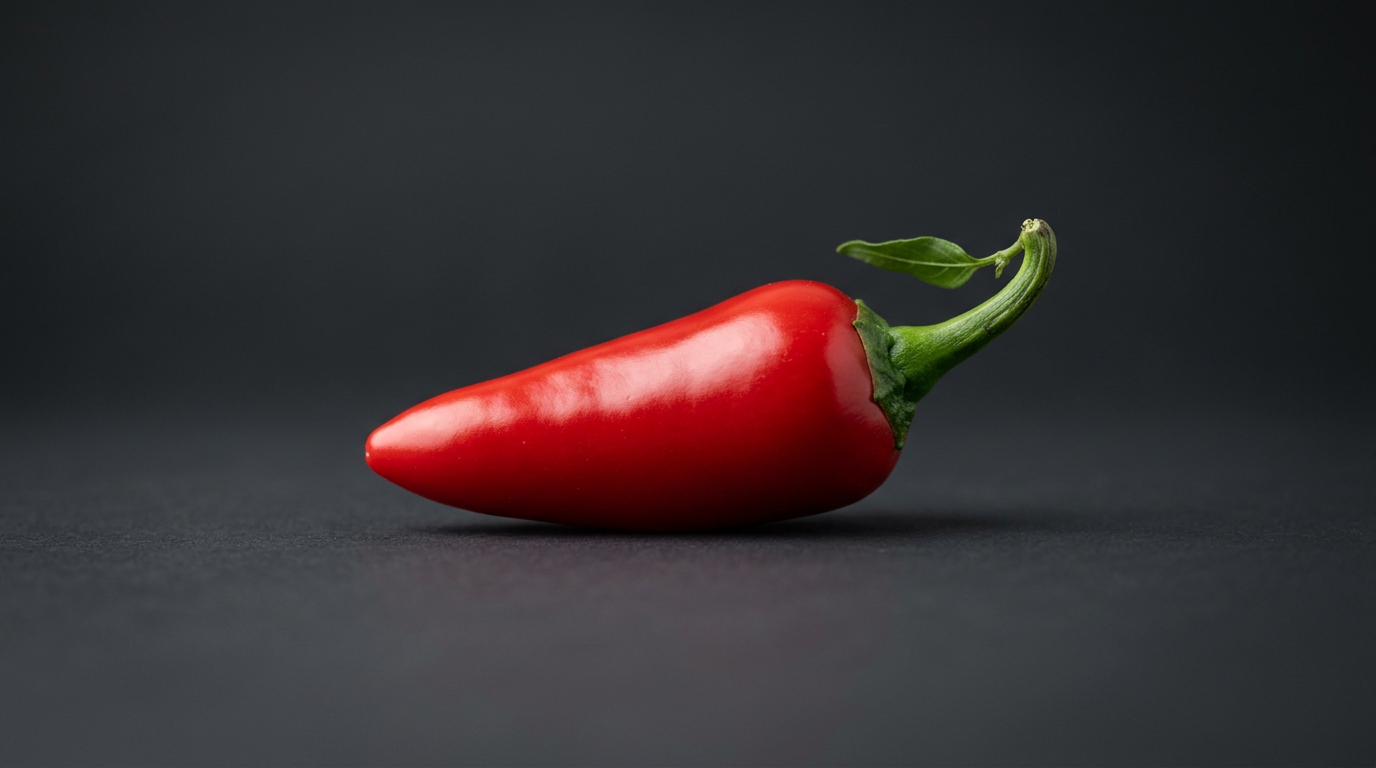
A single ripe red Fresno chili pepper with glossy skin and stem, photographed against a dark charcoal background.
Medium2,500 – 10,000 SHU

Fresno

Fresno County, California — developed in the 1950s

Jalapeño-shaped heat with a fruitier edge — red Fresnos bring color and capsaicin together.

Peak heat

10,000 SHU

Featured in

Not in a Harmony sauce yet

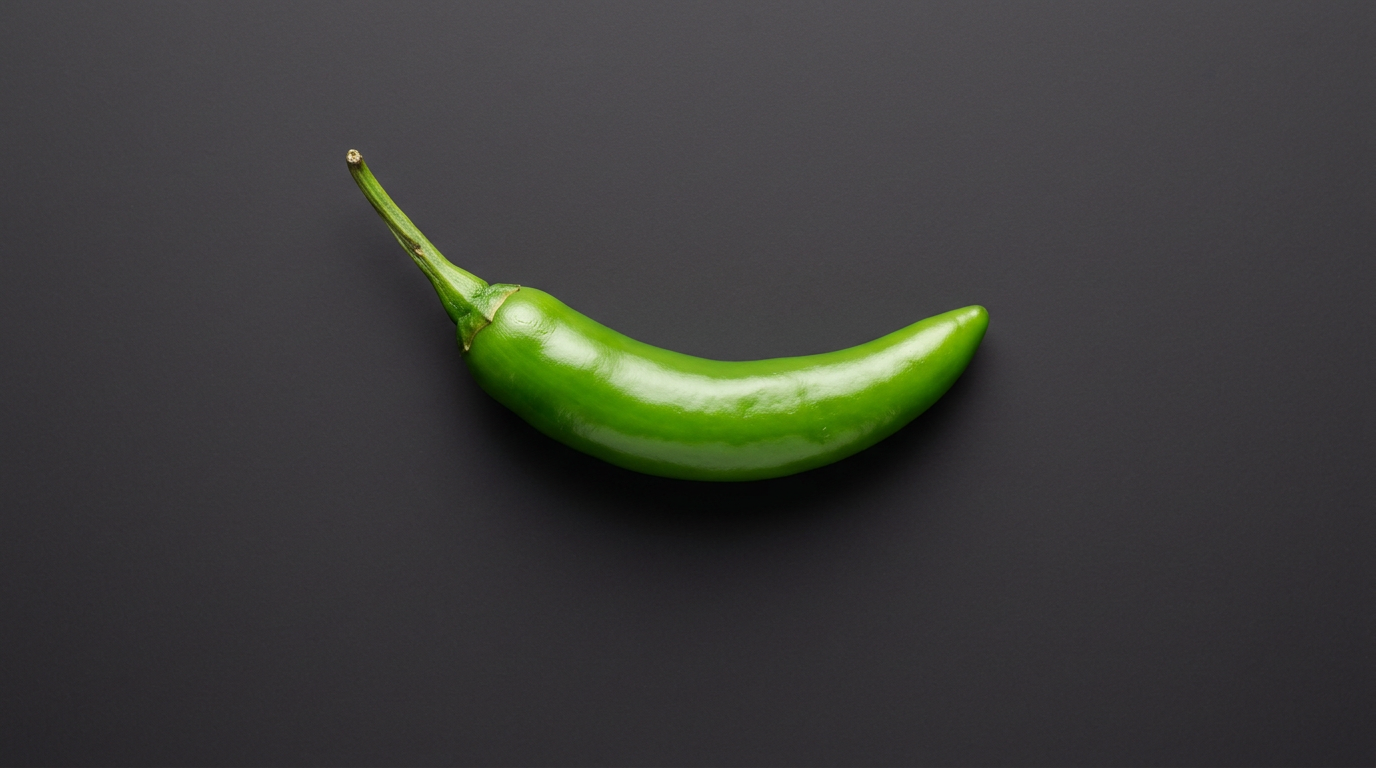
A single fresh green Serrano pepper, smaller and thinner than a Jalapeño, photographed against a dark charcoal background.
Medium-Hot10,000 – 25,000 SHU

Serrano

Sierras of Puebla and Hidalgo, Mexico

Smaller and punchier than Jalapeño — five to ten times the kick in a thinner pod.

Peak heat

25,000 SHU

Featured in

Not in a Harmony sauce yet

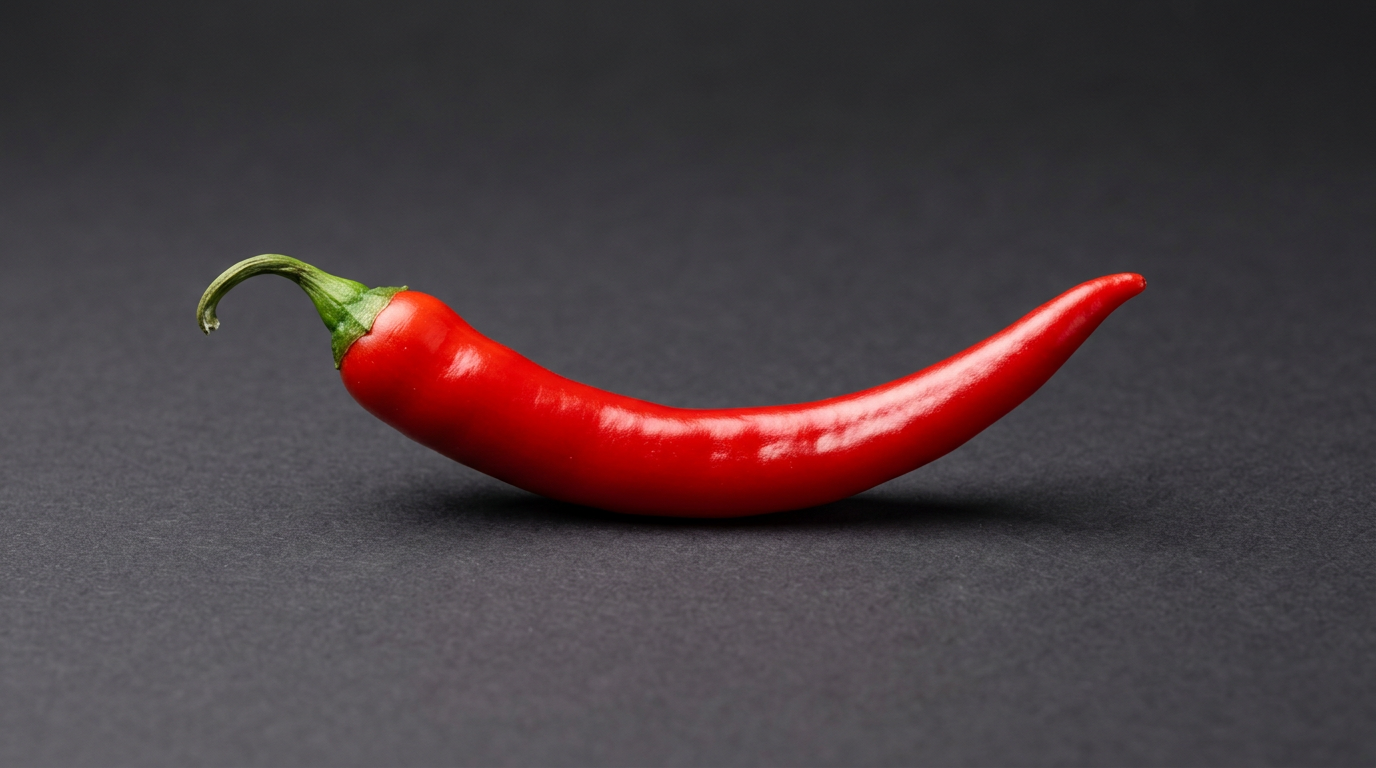
A single fresh long red Cayenne chili pepper with smooth glossy skin, photographed against a dark charcoal background.
Medium-Hot30,000 – 50,000 SHU

Cayenne

French Guiana / Cayenne region; now global

The archetypal “red pepper” behind supermarket hot sauce and kitchen spice jars.

Peak heat

50,000 SHU

Featured in

Not in a Harmony sauce yet

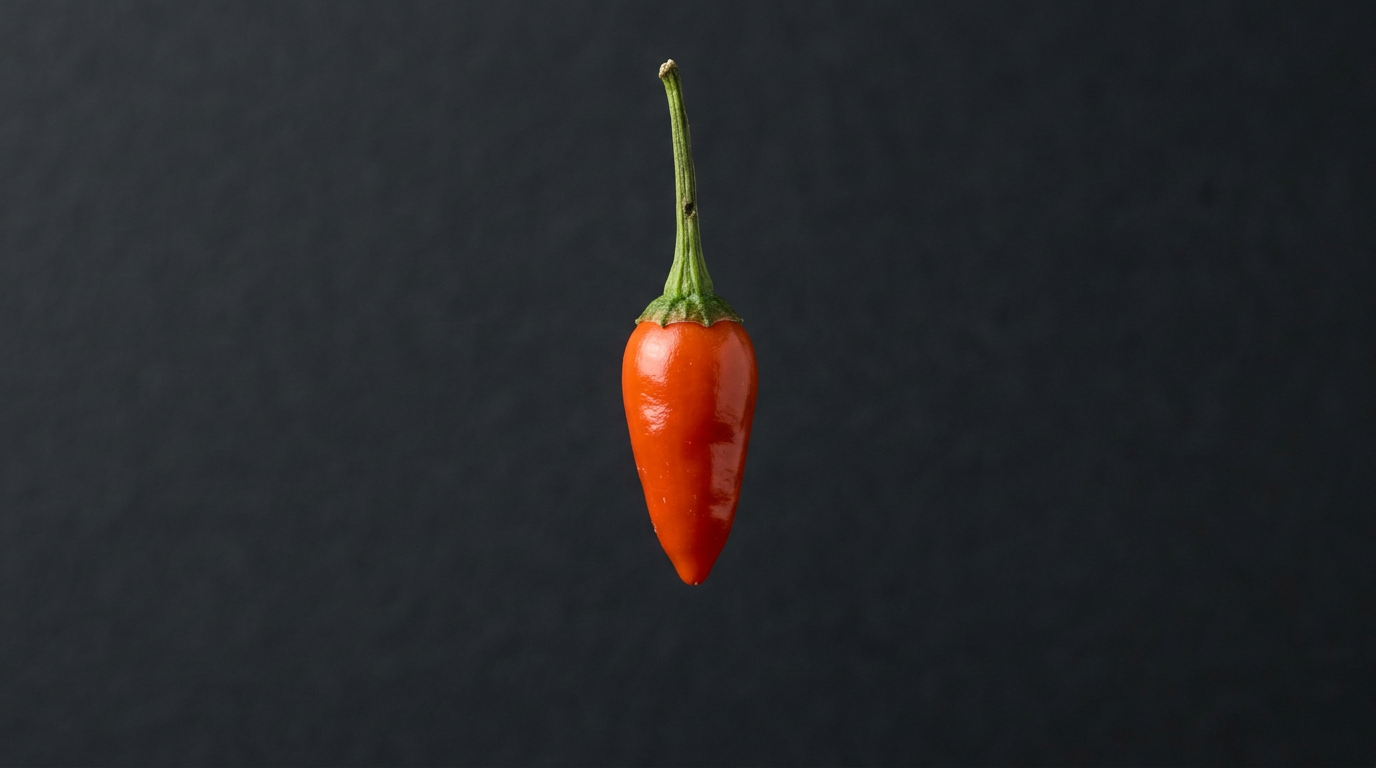
A single Tabasco cultivar pepper, small Capsicum frutescens pod with glossy skin, photographed against a dark charcoal background.
Medium-Hot30,000 – 50,000 SHU

Tabasco pepper

Mexico — commercialized on Avery Island, Louisiana

The namesake cultivar behind Louisiana-style vinegar pepper sauce — small, juicy, and high-yield.

Peak heat

50,000 SHU

Featured in

Not in a Harmony sauce yet

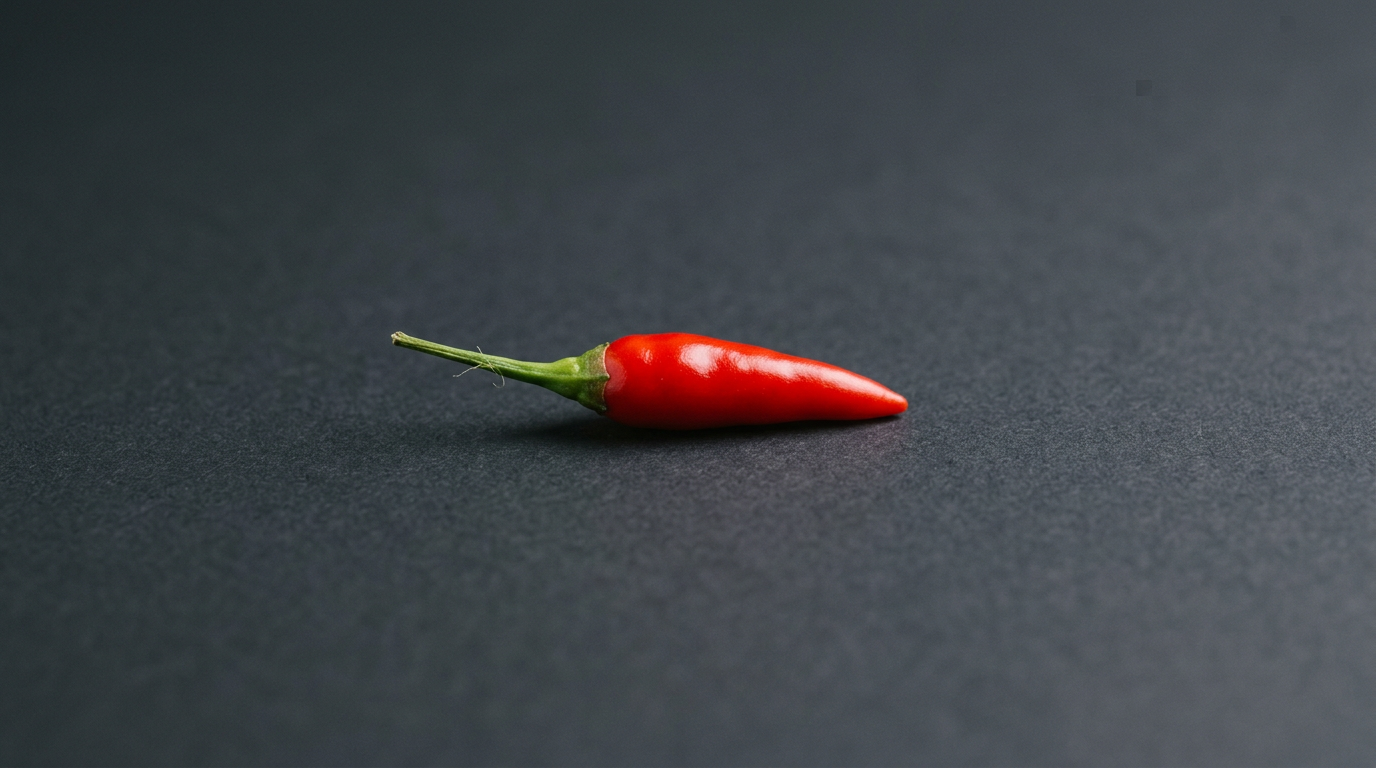
A single tiny bright red Thai bird’s eye chili pepper on stem, photographed against a dark charcoal background.
Hot50,000 – 150,000 SHU

Thai bird's eye

Southeast Asia — Thailand, Vietnam, Laos

Tiny red rockets — used by the handful in stir-fries, fish sauce, and curry pastes.

Peak heat

150,000 SHU

Featured in

Not in a Harmony sauce yet

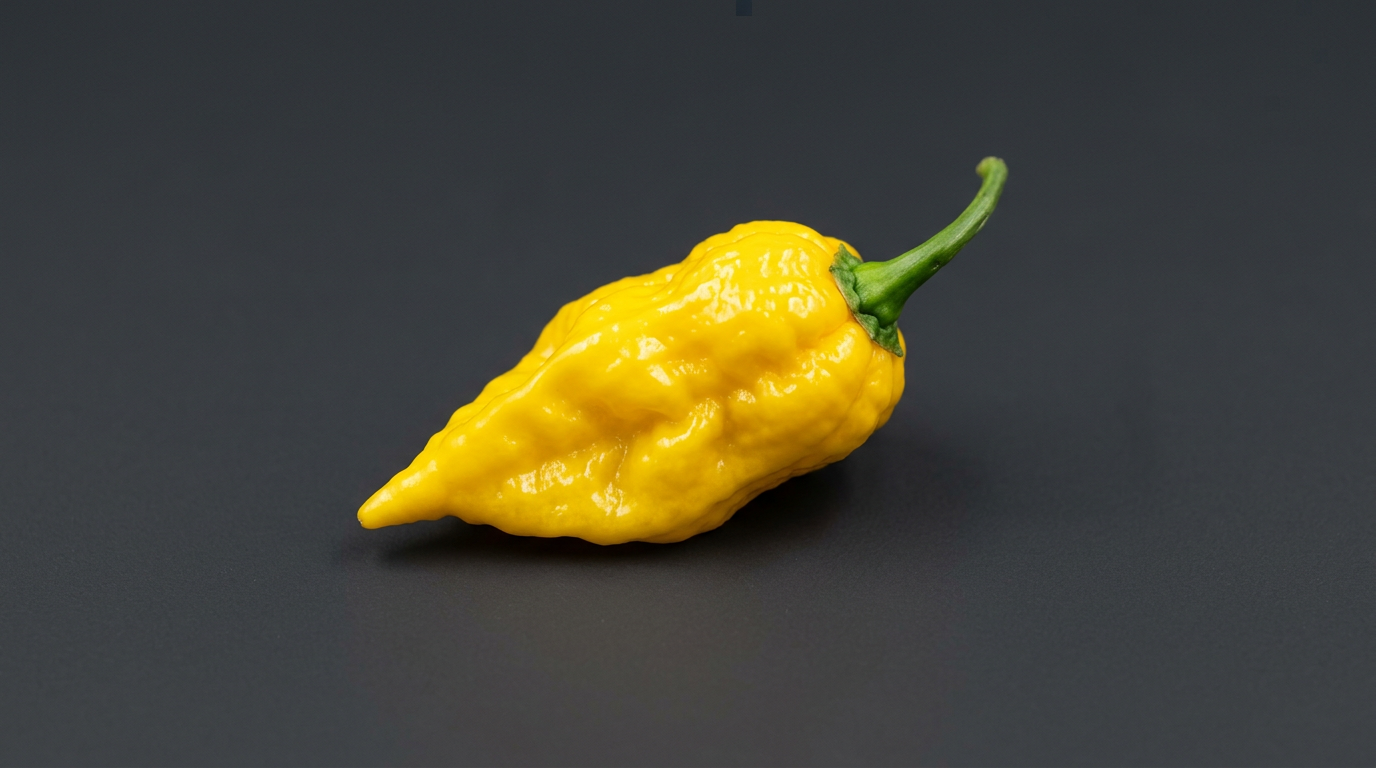
A single bright yellow Fatalii pepper with wrinkled tapered chinense pod, photographed against a dark charcoal background.
Hot125,000 – 325,000 SHU

Fatalii

Central / southern Africa — related to Habanero types

Sun-yellow chinense heat — searing and citrusy, with a reputation that matches the name.

Peak heat

325,000 SHU

Featured in

Not in a Harmony sauce yet

A single dark brown Chocolate Habanero pepper with wrinkled lantern-shaped pod, photographed against a dark charcoal background.
Hot300,000 – 577,000 SHU

Chocolate Habanero

Caribbean basin

Deep brown skin, smoky-sweet aroma, and chinense heat that outpaces common orange Habs.

Peak heat

577,000 SHU

Featured in

Not in a Harmony sauce yet

A single deep red Red Savina Habanero pepper with classic lantern shape, photographed against a dark charcoal background.
Hot350,000 – 577,000 SHU

Red Savina

Walnut, California — selectively bred from Habanero stock

Once the Guinness hottest — a deeper-red Habanero phenotype with brutal, sustained heat.

Peak heat

577,000 SHU

Featured in

Not in a Harmony sauce yet

A single bright red gnarled Trinidad Scorpion superhot pepper with scorpion-tail tip, photographed against a dark charcoal background.
Extreme800,000 – 1,463,700 SHU

Trinidad Scorpion

Moruga region, Trinidad and Tobago

Tail-stinger pods and blistering SHU — a former record holder that still defines “superhot.”

Peak heat

1,463,700 SHU

Featured in

Not in a Harmony sauce yet

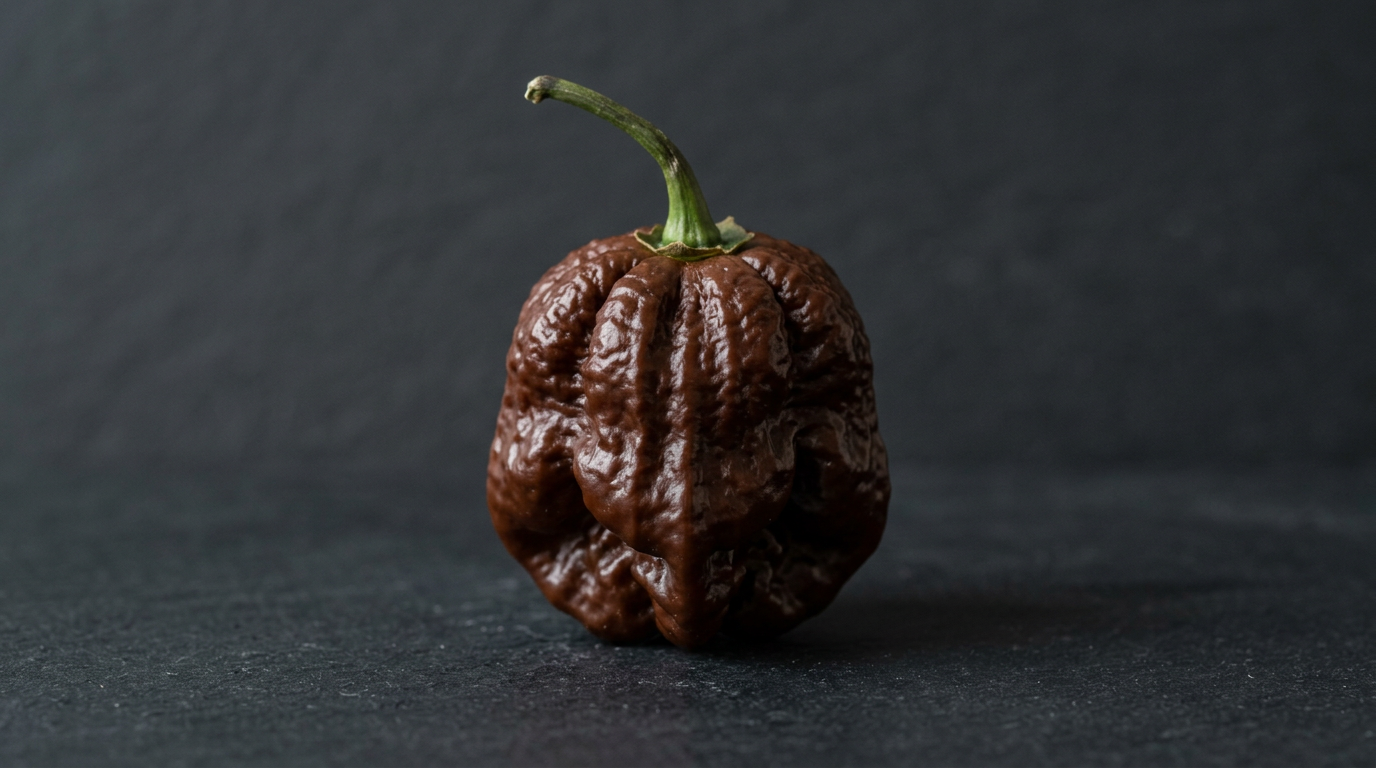
A single chocolate-brown gnarled 7 Pot Douglah superhot pepper, photographed against a dark charcoal background.
Extreme923,000 – 1,853,000 SHU

7 Pot Douglah

Trinidad

Chocolate-brown Trinidad superhot — fruity nose, then long, oily heat that coats the tongue.

Peak heat

1,853,000 SHU

Featured in

Not in a Harmony sauce yet

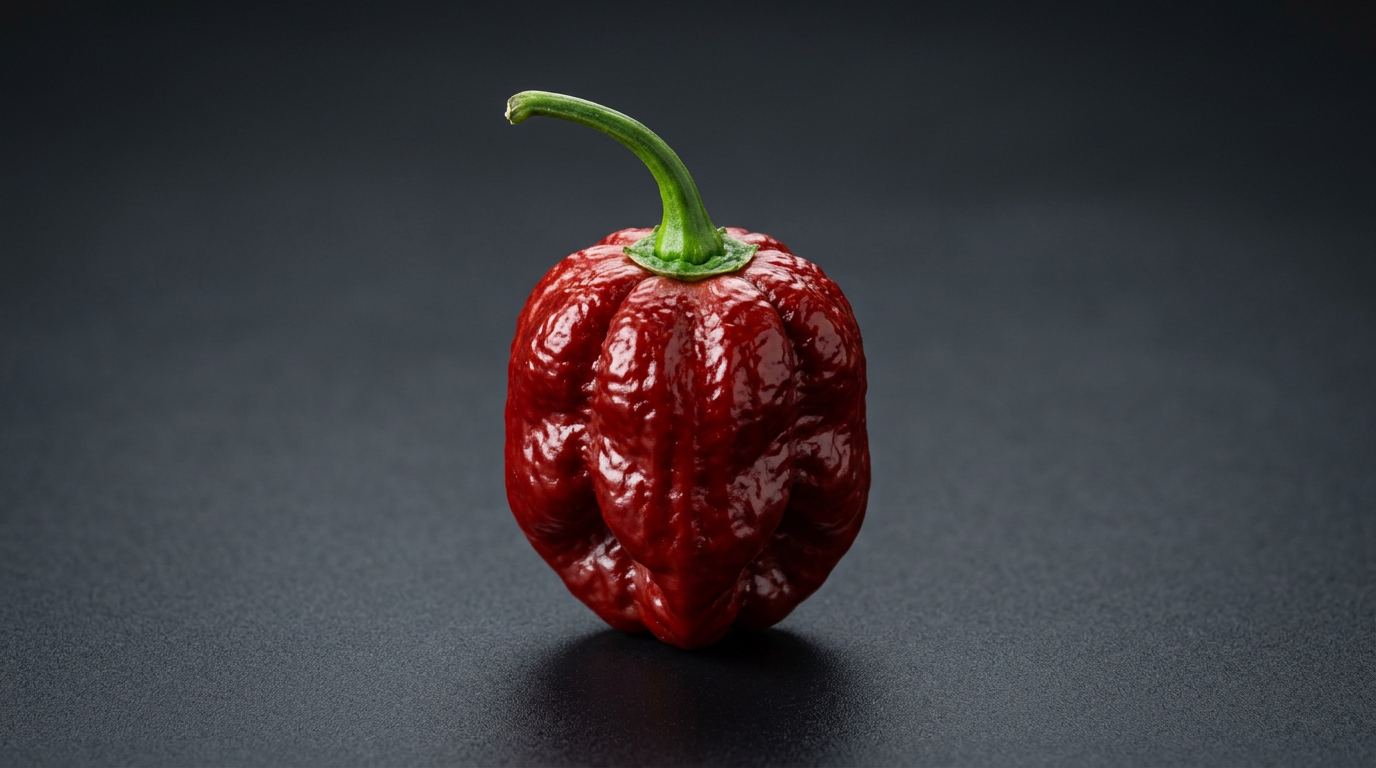
A single deep red wrinkled Naga Morich ghost-type pepper with tapered pod, photographed against a dark charcoal background.
Extreme1,000,000 – 1,500,000 SHU

Naga Morich

Bangladesh and northeast India

Close cousin to the ghost-pepper family — wrinkled pods and serious million-plus potential.

Peak heat

1,500,000 SHU

Featured in

Not in a Harmony sauce yet

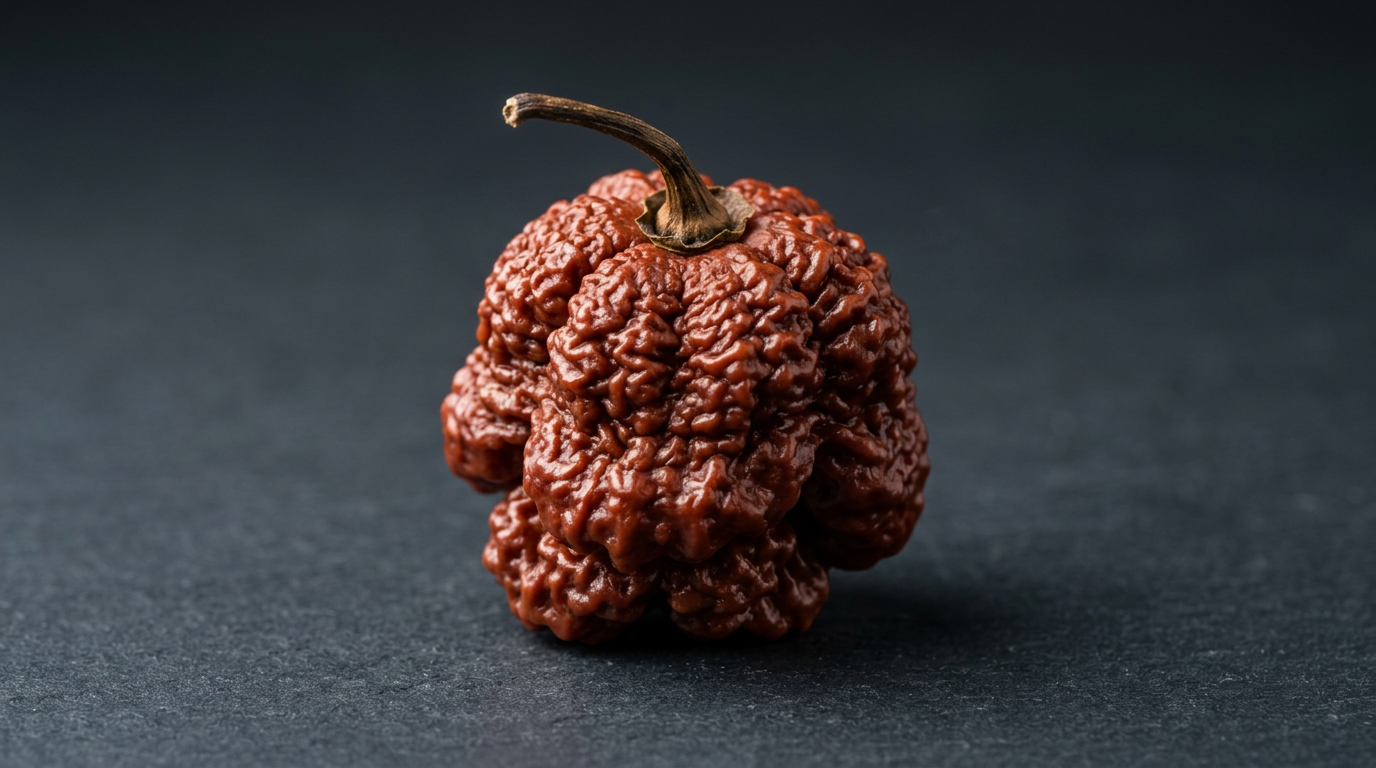
A single 7 Pot Brain Strain superhot pepper with extreme bumpy brain-like texture, photographed against a dark charcoal background.
Extreme1,000,000 – 1,350,000 SHU

7 Pot Brain Strain

Trinidad — stabilized by chili grower David Capiello

Grotesquely pitted, brain-like pods from the 7 Pot line — looks scary, tastes like danger.

Peak heat

1,350,000 SHU

Featured in

Not in a Harmony sauce yet

A single deeply wrinkled red Trinidad Moruga Scorpion superhot pepper, photographed against a dark charcoal background.
Extreme1,200,000 – 2,009,000 SHU

Trinidad Moruga scorpion

Moruga, Trinidad and Tobago

Trinidad’s scorpion-tailed monster — briefly crowned the hottest tested, still brutal today.

Peak heat

2,009,000 SHU

Featured in

Not in a Harmony sauce yet

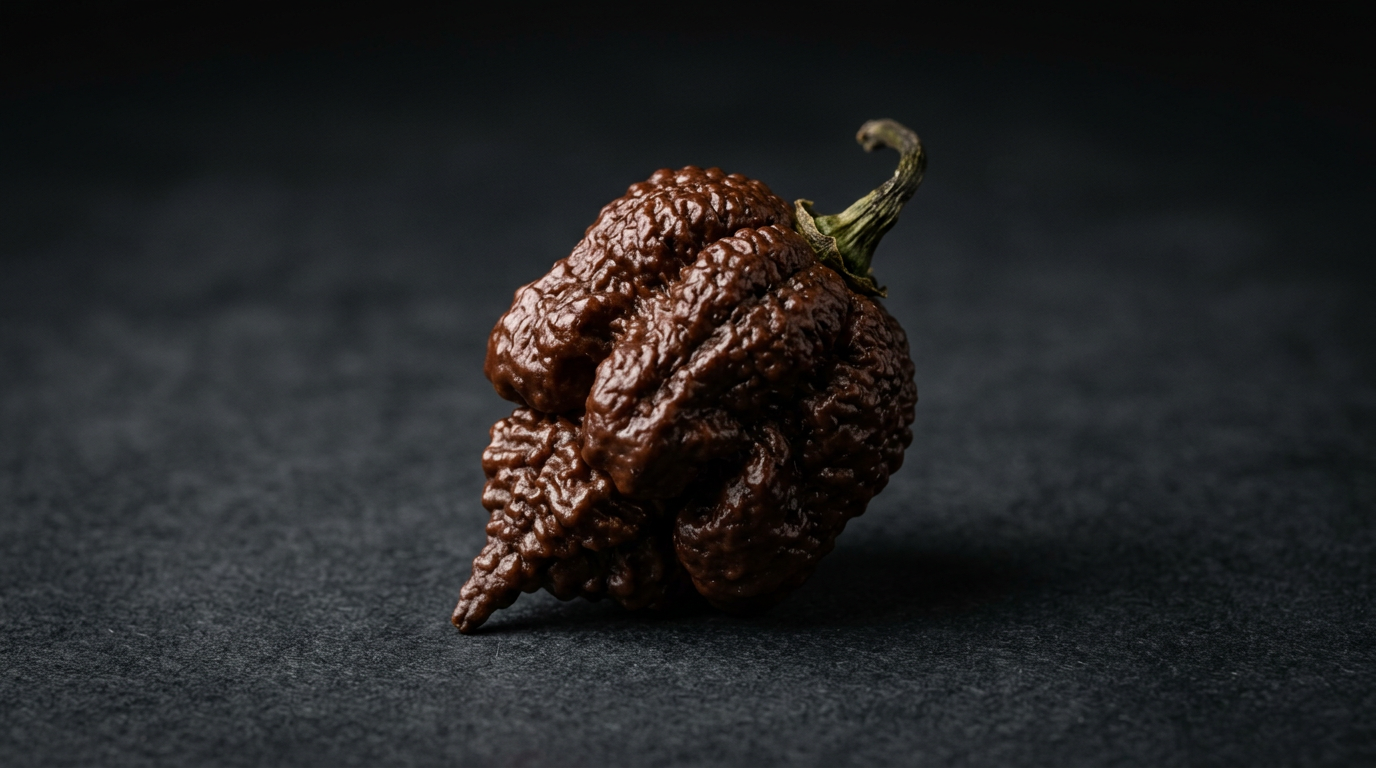
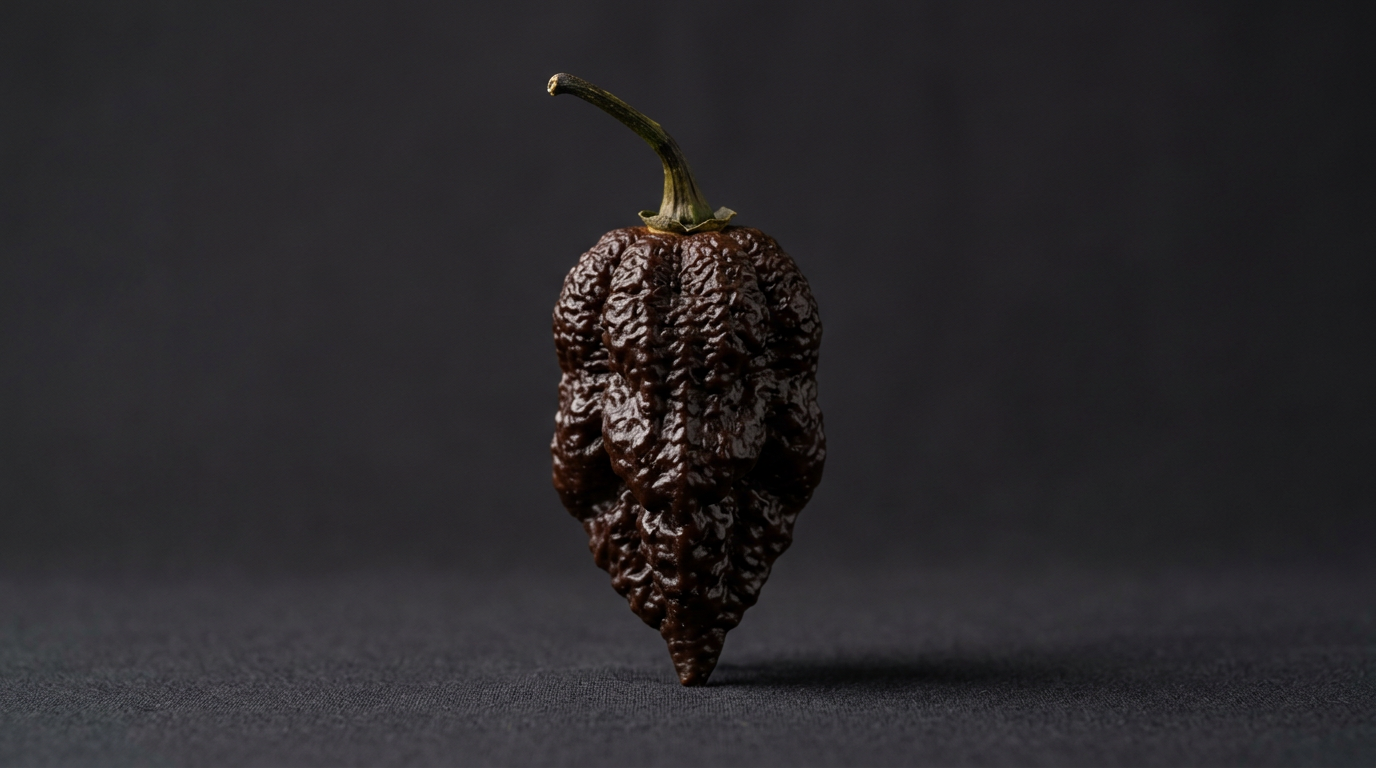
A single dark brown deeply wrinkled Chocolate Bhutlah hybrid superhot pepper, photographed against a dark charcoal background.
Extreme~2,000,000 SHU (variable)

Chocolate Bhutlah

Superhot grower selections — Bhut Jolokia × Trinidad Douglah crosses

Hybrid folklore from the ghost and douglah lines — brown pods, brutal heat, inconsistent batch to batch.

Peak heat

2,200,000 SHU

Featured in

Not in a Harmony sauce yet

How the Scoville Scale actually works.

From Wilbur Scoville’s 1912 dilution test to modern HPLC lab methods — and where every Harmony pepper lands on the scale.

Ready to try?

How the Scoville Scale actually works.